Service Area
1031 Exchange Services in Northeast Heights
We guide investors, advisors, and family offices in Northeast Heights, NM through compliant replacement property identification with national reach and meticulous deadline tracking.
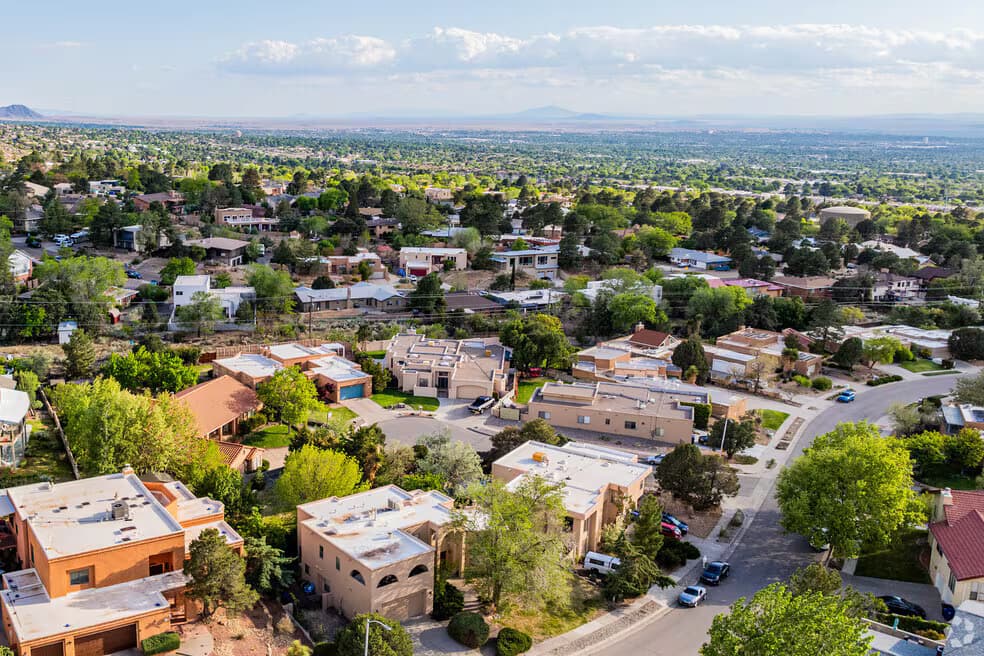
Northeast Heights investors in Albuquerque benefit from comprehensive 1031 exchange services that leverage both local market knowledge and nationwide property identification capabilities. This established residential and commercial district northeast of downtown Albuquerque, NM features diverse property types including multifamily complexes, retail centers, and office buildings that frequently serve as relinquished properties in exchanges.
Investors in Northeast Heights often exchange from local residential rental properties or commercial assets into replacement properties that offer stronger cash flow, better tenant credit, or geographic diversification. The area's mature infrastructure and stable demographics create opportunities for investors to exchange into newer properties or markets with stronger growth potential. Our services help Northeast Heights investors identify qualified replacement properties nationwide while coordinating with qualified intermediaries to ensure all IRS deadlines and documentation requirements are met. We provide strategic guidance on identification strategies, property evaluation, and exchange structure to optimize outcomes.
The Northeast Heights is the largest residential submarket in the metro, and its commercial real estate is built to match: long retail corridors along Menaul Boulevard, Wyoming Boulevard, San Mateo Boulevard, and Juan Tabo Boulevard, none of it flashy, most of it steady. This is where household-services retail follows rooftops, not where trophy assets sit, and a buyer should evaluate it on those terms rather than expect Uptown-style pricing or tenants.
A Deep, Stable Retail Corridor System
Unlike Uptown's concentrated retail nodes, the Northeast Heights spreads its commercial demand across four or five parallel boulevards, each carrying its own grocery stores, pharmacies, and neighborhood strip centers. That spread means less concentrated foot traffic than Uptown but also less exposure to any single center's vacancy, since tenants and customers are distributed across the whole grid rather than clustered at one mall.
Menaul Boulevard tends to carry the heaviest daily traffic counts of the four corridors, while Juan Tabo and San Mateo run a step behind, and a buyer comparing two otherwise similar strip centers on different boulevards should weigh that traffic difference directly rather than assume all four corridors perform equally.
Sandia and Kirtland Households Drive a Real Share of Demand
A large share of Northeast Heights residents work at Sandia National Laboratories or Kirtland Air Force Base, commuting through the Eubank and Wyoming gates, and that steady federal and defense-contractor payroll base supports household-services retail, healthcare, and casual dining tenants that hold up better through recessions than discretionary retail elsewhere in the metro.
Retail centers closest to those gate entrances tend to see a reliable lunchtime and after-work rush tied to shift changes, and a buyer evaluating a strip center near Eubank or Wyoming should ask a prospective tenant about daypart sales patterns, since a restaurant leaning heavily on that commuter traffic performs differently than one drawing mostly from evening neighborhood business.
What Actually Trades in This Submarket
Realistic identification candidates here include:
- neighborhood strip centers with grocery or pharmacy tenants
- medical office buildings near Menaul and San Mateo
- freestanding restaurant pads with drive-through components
- small multi-tenant retail buildings on Juan Tabo
Medical Office Has Grown Alongside an Aging Resident Base
Clinics and medical office buildings have expanded along Menaul in recent years, tracking a resident population that has aged in place through decades of stable homeownership. A rent roll on a Northeast Heights medical building should confirm whether tenants operate on triple-net medical leases or standard modified-gross terms, since the two carry very different expense-pass-through assumptions for a buyer's underwriting. A buyer should also ask whether a clinic tenant bills primarily through Medicare, since reimbursement-rate changes can affect a small independent practice's ability to absorb future rent increases differently than a practice with a broader private-insurance mix.
Diligence Notes for This Corridor System
Many Northeast Heights strip centers were built in the 1970s and 1980s, so roof age and parking-lot condition deserve a hard look regardless of what a seller's disclosure states. Traffic counts also vary meaningfully block to block along these long boulevards, so a buyer should pull current counts for the specific parcel rather than rely on a general Menaul or Wyoming average that may not reflect that block's actual visibility and access.
Outparcel pads in front of older grocery-anchored centers sometimes carry reciprocal easement agreements written decades ago, and a buyer should read those agreements closely rather than assume a new drive-through tenant can be added without the anchor tenant's sign-off, since some older Northeast Heights REAs still give the grocery anchor approval rights over any change to shared parking or access.
Household-Services Tenants Round Out the Mix
Beyond grocery and pharmacy anchors, the Northeast Heights supports a steady base of household-services tenants: dry cleaners, nail and hair salons, tax preparers, and small urgent-care clinics that lean on repeat neighborhood customers rather than destination shoppers. That tenant mix tends to hold occupancy through recessions better than discretionary retail, since these are services households keep paying for even when they cut back elsewhere, though individual lease sizes and rents run smaller than a national tenant would command.
Deal-Level FAQs for Northeast Heights
Why does the Northeast Heights spread retail across so many corridors instead of one center?
The submarket grew as decades of residential subdivisions rather than a single planned retail node, so grocery, pharmacy, and strip retail tenants distributed along Menaul, Wyoming, San Mateo, and Juan Tabo Boulevards rather than concentrating in one mall district.
How much does Sandia and Kirtland employment support this submarket's retail?
A meaningful share of Northeast Heights households commute to Sandia National Laboratories or Kirtland Air Force Base, and that steady payroll base supports household-services and healthcare tenants that tend to hold up better through downturns.
Is medical office a growing category in the Northeast Heights?
Yes, tracking a resident population that has aged in place over decades. Buyers should confirm whether tenants operate on triple-net medical leases or modified-gross terms before underwriting expense pass-throughs.
What should a buyer check on an older Northeast Heights strip center?
Roof age and parking-lot condition on 1970s and 1980s-era centers deserve direct inspection rather than reliance on a seller's disclosure, and traffic counts should be pulled for the specific block rather than a general corridor average.
Does this submarket carry the same cap rate compression as Uptown?
No. Northeast Heights retail trades at a discount to Uptown's concentrated, credit-tenant product, reflecting its more distributed, neighborhood-oriented demand base.
Popular Paths in Northeast Heights
#1 Service
Multifamily Property Identification
Northeast Heights investors frequently exchange from single-family rentals into larger multifamily properties for scale and professional management. Our nationwide network identifies multifamily assets in markets with strong demographic and employment trends.
Explore Multifamily Property Identification#2 Service
NNN Replacement Sourcing
NNN properties offer passive income and credit tenant security for Northeast Heights investors seeking to reduce management responsibilities. We source NNN assets nationwide that match investment criteria and cap rate requirements.
Explore NNN Replacement Sourcing#3 Service
45 Day Identification Strategy
Strategic identification planning is critical for Northeast Heights investors, especially when considering properties outside New Mexico. We develop identification strategies that maximize flexibility while ensuring compliance with IRS requirements.
Explore 45 Day Identification Strategy#4 Property Type
Medical Office Buildings
Medical office buildings provide stable, long-term leases and demographic-driven demand, making them attractive replacement properties for Northeast Heights investors seeking recession-resistant assets.
Explore Medical Office Buildings#5 Property Type
Self Storage Facilities
Self storage properties offer strong cash flow and operational simplicity, suitable for Northeast Heights investors seeking passive income with minimal management requirements.
Explore Self Storage Facilities#6 Service
Retail Property Lists
Retail properties provide diversification and income potential for Northeast Heights investors. We provide curated retail property listings that match investment criteria and exchange timelines.
Explore Retail Property ListsFAQs about Northeast Heights
What 1031 exchange support is available for Northeast Heights, NM investors?
We provide comprehensive 1031 exchange support for Northeast Heights, NM investors, including nationwide replacement property identification, strategic planning, and coordination with qualified intermediaries. Our services help Northeast Heights investors identify qualified replacement properties across all 50 states while managing IRS deadlines.
Can Northeast Heights, NM investors exchange local properties into out-of-state replacement properties?
Yes, Northeast Heights, NM investors can exchange into replacement properties anywhere in the United States. We help identify qualified like-kind properties nationwide and coordinate the exchange process to ensure all IRS requirements and deadlines are met.
What are common exchange scenarios for Northeast Heights, NM property owners?
Northeast Heights, NM investors commonly exchange from single-family rentals or local commercial properties into larger multifamily assets, NNN retail properties, or properties in stronger markets. These exchanges often aim to improve cash flow, reduce management burden, or achieve geographic diversification.
How do documentary taxes affect 1031 exchanges for Northeast Heights, NM properties?
1031 exchanges defer federal capital gains tax but do not eliminate state or local documentary fees that may apply to Northeast Heights, NM properties or replacement properties. We coordinate with qualified intermediaries and tax advisors to ensure all applicable fees are properly addressed during the exchange process.
Next Step
Plan your Northeast Heights exchange
Coordinate replacement property identification for Northeast Heights, NM assets with nationwide sourcing and Qualified Intermediary alignment.