Service Area
1031 Exchange Services in Artesia
We guide investors, advisors, and family offices in Artesia, NM through compliant replacement property identification with national reach and meticulous deadline tracking.
Artesia, NM investors benefit from specialized 1031 exchange services that address the unique dynamics of energy-sector markets. Located in southeastern New Mexico approximately 200 miles southeast of Albuquerque, NM, Artesia serves as a hub for oil and gas operations, creating distinct exchange patterns driven by commodity cycles and regional economic factors.
Investors in Artesia often exchange from energy-related commercial properties, agricultural land, or local retail assets into more diversified replacement properties located in stable markets nationwide. The area's economic dependence on oil and gas creates motivation for investors to diversify geographically through 1031 exchanges. Our nationwide property identification services help Artesia investors locate qualified replacement properties that provide portfolio stability and geographic diversification. We coordinate with qualified intermediaries to ensure all exchange deadlines are met and documentation requirements are satisfied, regardless of where replacement properties are located.
Artesia sits in Eddy County on the northern edge of the Permian Basin, a smaller and steadier counterpart to Carlsbad and Hobbs a bit further south. Oil and gas revenue funds an unusually well-resourced local school district and city budget here, and that fiscal strength shows up in the town's infrastructure even when drilling activity slows.
A Refinery Anchors the Industrial Side
HollyFrontier's Navajo Refinery has operated in Artesia for decades and remains one of the area's largest employers, giving the town a heavier industrial and midstream presence than most Permian Basin communities its size. Commercial and industrial land near the refinery corridor tends to draw pipeline, trucking, and oilfield-service tenants rather than the retail or office demand seen in Carlsbad's more tourism-oriented economy.
Dairy and Pecans Round Out the Base
Eddy County dairy operations and pecan orchards give Artesia a second economic leg that doesn't move in lockstep with oil prices, and that combination has historically made the town's commercial vacancy less volatile than Hobbs or Carlsbad during a drilling downturn. A buyer evaluating a retail or small industrial building here should ask how much of its tenant base actually depends on oilfield spending versus the steadier agricultural and refinery employment base.
Historic Downtown Alongside Newer Highway Retail
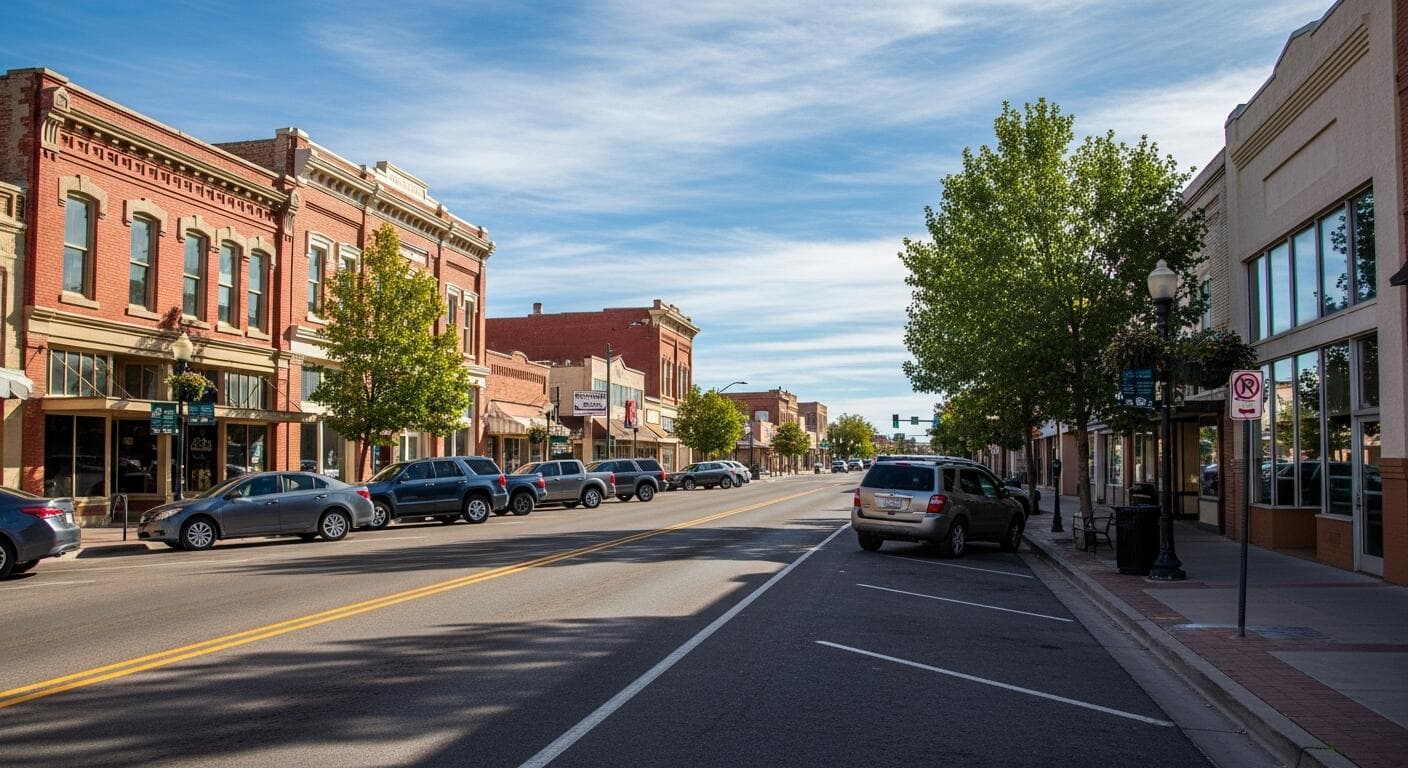
Artesia's Main Street carries a walkable historic downtown core, including a well-known collection of public art and murals, while newer retail and fuel-service development has clustered along the highway corridors on the edge of town. The two commercial areas serve different customers and shouldn't be underwritten as a single trade area.
Water Rights Run Through Everything in Eddy County
New Mexico's ongoing Pecos River water rights adjudication affects agricultural land throughout Eddy County, and a buyer looking at farmland or agriculturally zoned parcels near Artesia should confirm a property's specific water right before assuming irrigation capacity transfers automatically with the sale. Oil and gas producers in the area also compete with agricultural users for groundwater access, which has made water rights one of the more closely tracked variables in any Eddy County land transaction.
What Actually Trades
Realistic Artesia identification candidates include refinery- and pipeline-adjacent industrial land, small owner-operator retail and office along Main Street, dairy and agricultural service buildings, and highway convenience or fuel properties on the edges of town. A buyer should also ask whether a candidate property's lease terms adjust with local oil and gas tax revenue cycles, since Eddy County's own fiscal health tends to track the same commodity swings that affect private tenants.
Deal-Level FAQs for Artesia
How does the Navajo Refinery affect Artesia's commercial market?
It anchors a heavier industrial and midstream tenant base than most towns Artesia's size, drawing pipeline, trucking, and oilfield-service users to land near the refinery corridor.
Is Artesia as exposed to oil price swings as Hobbs or Carlsbad?
Somewhat less. Dairy and pecan agriculture give the local economy a second leg that doesn't move with oil prices, which has historically kept commercial vacancy steadier here through downturns.
What does Artesia's downtown commercial district look like?
A walkable Main Street core known for its public art and murals, distinct from the newer highway-fronting retail and fuel development on the edges of town — the two shouldn't be treated as one trade area.
Are there real replacement-property options here beyond energy-sector buildings?
Yes. Dairy and agricultural service buildings, small owner-operator retail downtown, and highway convenience properties all come up, not just refinery-adjacent industrial land.
Does Artesia's local government have stronger finances than comparable towns?
Generally yes — oil and gas tax revenue has funded well-resourced schools and city infrastructure here, which is worth noting for a buyer evaluating the long-term stability of the local market.
Popular Paths in Artesia
#1 Service
NNN Replacement Sourcing
Artesia investors frequently seek NNN properties with national credit tenants to diversify away from local energy-sector exposure. Our nationwide sourcing identifies NNN assets that provide stable income and geographic diversification.
Explore NNN Replacement Sourcing#2 Service
180 Day Timeline Control
Managing the 180-day closing deadline requires careful coordination, especially when replacement properties are located far from Artesia. We provide timeline management and coordination services to ensure deadlines are met.
Explore 180 Day Timeline Control#3 Property Type
Pharmacy
Pharmacy properties offer strong tenant credit and recession-resistant characteristics, making them attractive replacement properties for Artesia investors seeking stability and diversification.
Explore Pharmacy#4 Service
Multifamily Property Identification
Multifamily properties provide portfolio diversification and demographic-driven growth potential for Artesia investors. We identify multifamily assets in markets with strong population and employment trends.
Explore Multifamily Property Identification#5 Property Type
Auto Parts Retail
Auto parts retail properties feature long-term leases with national operators and provide consistent cash flow, suitable for Artesia investors seeking stable replacement property income.
Explore Auto Parts Retail#6 Service
Three Property Rule Planning
The three-property rule provides flexibility for Artesia investors identifying replacement properties. We help structure identification strategies that maximize options while maintaining compliance.
Explore Three Property Rule PlanningFAQs about Artesia
What 1031 exchange services are available for Artesia, NM investors?
We provide comprehensive 1031 exchange services for Artesia, NM investors, including nationwide replacement property identification, timeline management, and coordination with qualified intermediaries. Our services help Artesia investors diversify geographically while deferring capital gains tax.
Can Artesia, NM investors exchange energy-sector properties into other asset types?
Yes, Artesia, NM investors can exchange energy-related commercial properties into other like-kind real estate, such as retail, multifamily, or industrial properties. The key requirement is that both properties are held for investment or business purposes and qualify as like-kind real estate under IRS rules.
How do we coordinate exchanges when replacement properties are far from Artesia, NM?
We coordinate with qualified intermediaries nationwide to facilitate exchanges for Artesia, NM investors regardless of replacement property location. Our process ensures all deadlines are met, documentation is properly prepared, and the exchange structure complies with IRS requirements.
What documentation is needed for 1031 exchanges involving Artesia, NM properties?
Artesia, NM investors need identification letters submitted within 45 days, exchange agreements with qualified intermediaries, and closing documentation. We help prepare identification letters and coordinate with intermediaries and tax advisors to ensure all documentation requirements are satisfied.
Next Step
Plan your Artesia exchange
Coordinate replacement property identification for Artesia, NM assets with nationwide sourcing and Qualified Intermediary alignment.