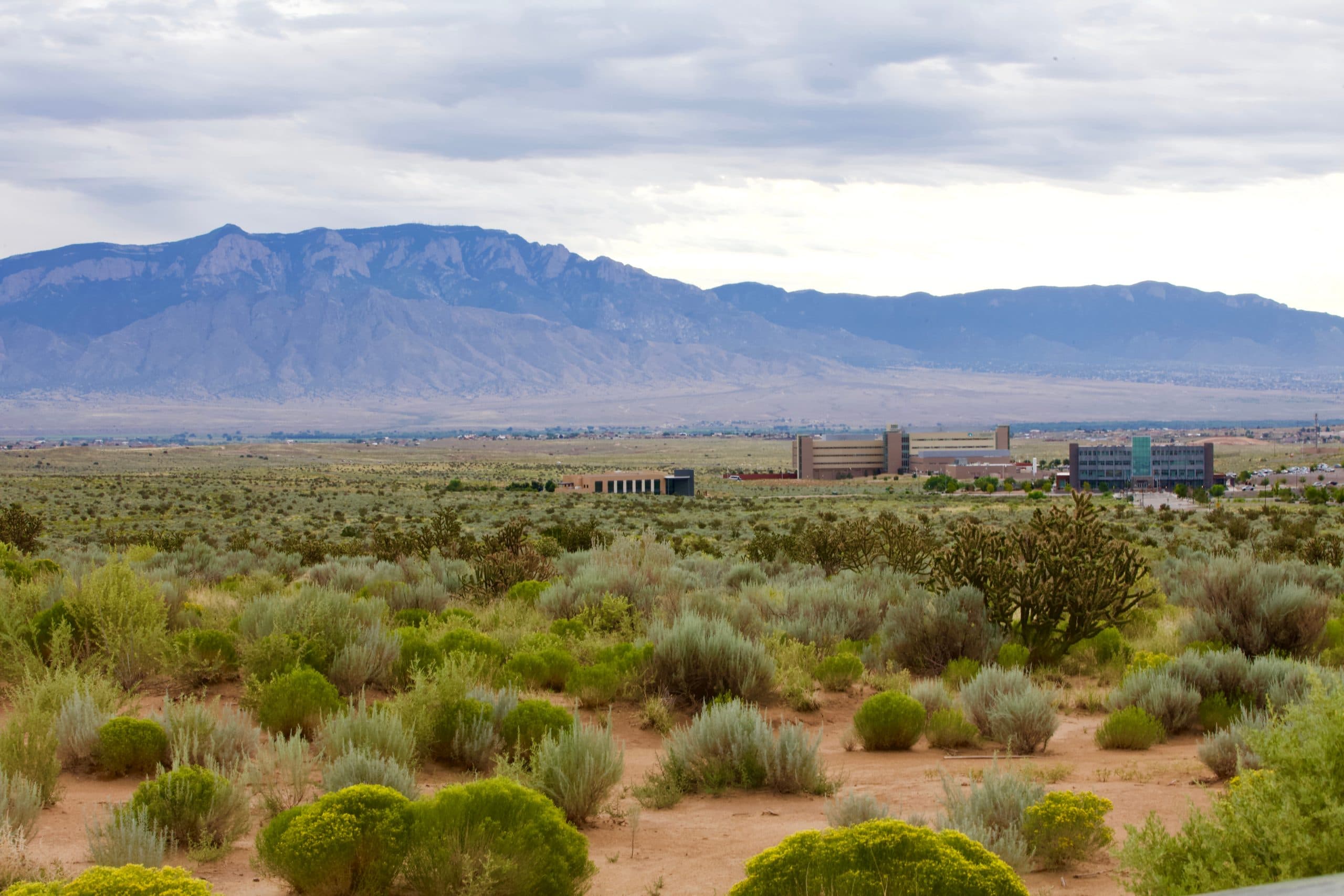
Service Area
1031 Exchange Services in Rio Rancho
We guide investors, advisors, and family offices in Rio Rancho, NM through compliant replacement property identification with national reach and meticulous deadline tracking.
Rio Rancho, NM investors pursuing 1031 exchanges benefit from property identification services tailored to this rapidly growing suburb northwest of Albuquerque. As one of New Mexico's fastest-growing cities, Rio Rancho's economy is supported by Intel's semiconductor manufacturing facility, Presbyterian Rust Medical Center, and expanding retail corridors along NM-528 and Unser Boulevard. Investors selling residential rentals, commercial properties, or vacant land in Rio Rancho frequently seek replacement assets with stronger income profiles or diversification beyond the Albuquerque metro.
Rio Rancho's residential growth has driven significant retail and service-sector development, creating exchange opportunities for investors transitioning from single-family rentals into larger multifamily or NNN commercial properties. The city's position along the I-25 corridor and proximity to Albuquerque provide access to a broad economic base while local cap rates often motivate investors to explore replacement properties in higher-yield markets nationwide. Our services help Rio Rancho investors navigate the 45-day identification and 180-day closing deadlines while coordinating with qualified intermediaries to ensure IRS compliance. We provide strategic guidance on property selection, identification structures, and market analysis to optimize exchange outcomes.
Rio Rancho is its own incorporated city in Sandoval County, not a neighborhood of Albuquerque, and that distinction matters for zoning, permitting, and tax jurisdiction on any replacement property here. It is also the fastest-growing part of the metro, which changes the math on land and retail deals compared to the built-out east side, and a buyer should plan on running diligence through a different set of county offices than an Albuquerque-based search would require.
A Manufacturing Economy Layered Under the Growth Story
Intel has operated a semiconductor facility in Rio Rancho since the 1980s, and while employment there has moved through several cycles of expansion and contraction over the decades, the plant remains a significant anchor for the local industrial and flex market. Buildings and land near the Intel campus and along the US-550 corridor carry a different tenant logic than a generic industrial park, since suppliers and support-service tenants cluster near the plant for logistics reasons.
A buyer evaluating industrial or flex space near the plant should ask directly about the tenant's dependency on Intel-related contracts, since a building leased to a single supplier tied closely to the fab's own production schedule carries a different risk profile than one leased to a diversified logistics or distribution user.
Retail and Medical Followed the Rooftops
Presbyterian's Rust Medical Center anchors a growing medical office cluster, and retail along Rio Rancho Boulevard and Unser Boulevard has expanded to keep pace with new residential subdivisions. Because Rio Rancho's population has grown faster than its east-side neighbor for years, retail and medical office here can carry stronger rent growth assumptions than equivalent product in an already-mature Albuquerque submarket, though the base rents typically start lower.
What Actually Trades in Rio Rancho
Realistic identification candidates in this market include:
- flex-industrial buildings near the US-550 corridor and Intel campus
- medical office space near Rust Medical Center
- suburban retail strips along Rio Rancho Boulevard and Unser Boulevard
- newer single-tenant net lease pads in growth subdivisions
Land Is Cheaper Here, and So Is the Ceiling
Land costs in Rio Rancho run lower than comparable Albuquerque parcels, which is part of why the city has absorbed so much residential growth. That same dynamic caps rents on new retail construction, since tenants have options and landlords compete on rate to fill new centers. An exchange buyer chasing yield here should model rent growth conservatively against the market's own recent history rather than assume Albuquerque-core rent trends apply directly, and should pull actual asking rents from at least two or three currently marketed Rio Rancho centers before finalizing a pro forma.
Jurisdiction and Utility Notes for Buyers
Because Rio Rancho runs its own permitting, water rights, and utility systems separate from the City of Albuquerque, a buyer moving from an Albuquerque-based identification to a Rio Rancho candidate should confirm water and wastewater capacity for the specific parcel early, since availability varies more by subdivision phase here than it does in the older, fully built-out parts of Albuquerque proper.
A buyer should also confirm which utility provider actually serves a given Rio Rancho parcel, since some older platted sections of the city were developed under different water-utility ownership arrangements before consolidation, and a title company unfamiliar with Sandoval County records can miss an outdated easement reference that still shows up in the chain of title.
Casino and Hospital Traffic Support Nearby Commercial Nodes
Santa Ana Star Casino, operated by the Pueblo of Santa Ana just north of the city, draws steady visitor traffic that supports nearby hotel and restaurant demand along the US-550 corridor, separate from the retail growth tied purely to residential rooftops. Similarly, Rust Medical Center has become enough of a draw on its own that medical and urgent-care tenants have started locating along Unser Boulevard specifically to capture referral and follow-up visit traffic, rather than simply serving the immediate neighborhood.
An investor evaluating a Rio Rancho retail or medical candidate should ask what share of customer traffic is tied to these two anchors specifically, since that traffic pattern behaves differently than pure rooftop-driven demand elsewhere in the city and can hold up noticeably better during a slow residential construction cycle than demand tied purely to new-home closings.
Deal-Level FAQs for Rio Rancho
Is Rio Rancho legally part of Albuquerque?
No. Rio Rancho is its own incorporated city in Sandoval County with separate zoning, permitting, and tax jurisdiction, which a buyer needs to account for when moving a diligence checklist designed for Albuquerque city processes.
Does the Intel plant still matter for Rio Rancho industrial real estate?
Yes, even though employment there has cycled up and down over the decades. The plant remains a meaningful anchor for nearby flex and industrial demand, and suppliers and support tenants still cluster near it for logistics reasons.
Are Rio Rancho retail rents comparable to Albuquerque's east side?
Generally lower on a base-rent basis, reflecting cheaper land and newer competing supply, though rent growth assumptions can run stronger given the city's faster population growth.
What should a buyer check before identifying a new Rio Rancho retail pad?
Confirm water and wastewater capacity for that specific subdivision phase, since availability in Rio Rancho varies more by growth-phase timing than in Albuquerque's already built-out core.
Is medical office a strong replacement-property category in Rio Rancho?
It has been, particularly near Rust Medical Center, where population growth has supported a growing cluster of medical office tenants alongside the hospital anchor.
Popular Paths in Rio Rancho
#1 Service
Multifamily Property Identification
Rio Rancho investors frequently exchange from single-family rental portfolios into larger multifamily properties for scale and professional management. Our nationwide network identifies multifamily assets in markets with strong population growth and employment fundamentals.
Explore Multifamily Property Identification#2 Service
NNN Replacement Sourcing
NNN properties offer passive income and national credit tenant security for Rio Rancho investors seeking to reduce management responsibilities while maintaining steady cash flow. We source NNN assets nationwide that match investment criteria and cap rate targets.
Explore NNN Replacement Sourcing#3 Property Type
Drive Thru QSR
Drive-thru QSR properties align with Rio Rancho's suburban growth patterns and high commuter traffic, offering investors predictable cash flow with national franchise guarantees and long-term lease structures.
Explore Drive Thru QSR#4 Service
Market Comp Analysis
Rio Rancho investors rely on comparative market data to evaluate cap rates between the Albuquerque metro and out-of-state opportunities before drafting identification letters. We provide detailed comp analysis to support informed property selection.
Explore Market Comp AnalysisFAQs about Rio Rancho
What 1031 exchange support is available for Rio Rancho, NM investors?
We provide comprehensive 1031 exchange support for Rio Rancho, NM investors, including nationwide replacement property identification, market comp analysis, deadline management, and coordination with qualified intermediaries. Our services help Rio Rancho investors identify qualified replacement properties across all 50 states while managing IRS timelines.
Can Rio Rancho, NM investors exchange residential rental properties into commercial assets?
Yes, Rio Rancho, NM investors can exchange residential rental properties into commercial properties, as both qualify as like-kind real estate when held for investment purposes under IRS Section 1031. We help identify qualified replacement properties that match investment goals and improve portfolio diversification.
What identification strategies work best for Rio Rancho, NM exchanges?
Most Rio Rancho, NM investors start with the three-property rule for simplicity, then consider the 200 percent rule when they want more optionality across multiple NNN or multifamily assets. We develop customized identification strategies based on each investor's timeline, budget, and diversification objectives.
Next Step
Plan your Rio Rancho exchange
Coordinate replacement property identification for Rio Rancho, NM assets with nationwide sourcing and Qualified Intermediary alignment.