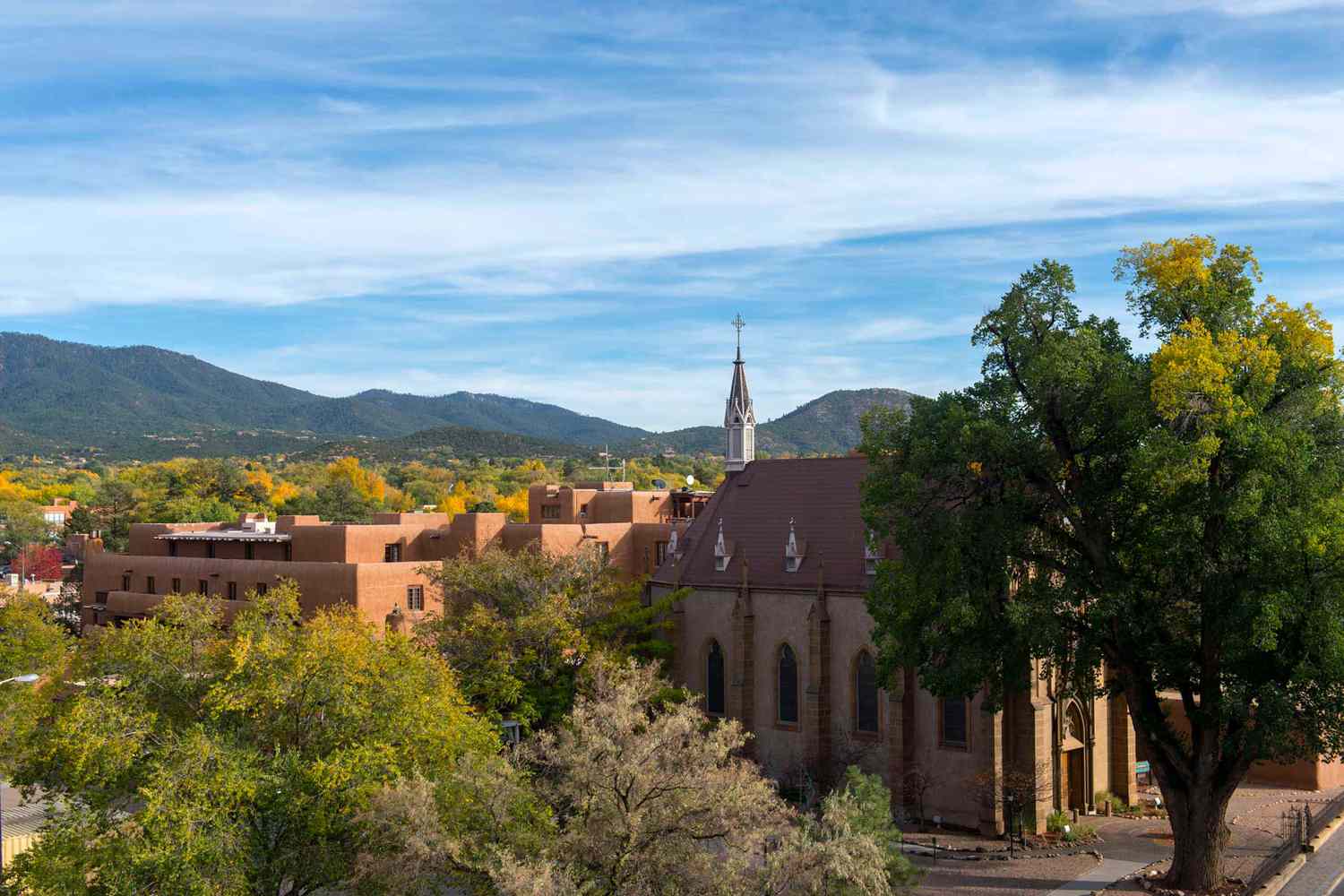
Service Area
1031 Exchange Services in Santa Fe
We guide investors, advisors, and family offices in Santa Fe, NM through compliant replacement property identification with national reach and meticulous deadline tracking.
Santa Fe, NM investors navigating 1031 exchanges benefit from specialized services tailored to this unique market's high-value property dynamics. As New Mexico's state capital and a world-renowned arts and tourism destination, Santa Fe's real estate market features luxury residential rentals, boutique commercial properties, gallery spaces on Canyon Road, and hospitality assets that frequently serve as relinquished properties in exchanges. The city's tourism economy, supported by attractions like the Santa Fe Plaza, Museum Hill, and the international art market, creates distinct property values and exchange motivations.
Investors in Santa Fe often exchange from high-value properties in the historic district, vacation rentals, or boutique commercial spaces into replacement properties that offer stronger cash flow, better tenant credit, or reduced management complexity. Santa Fe's premium property values and seasonal tourism patterns motivate many investors to diversify into NNN retail or multifamily assets in markets with year-round economic fundamentals. Our nationwide property identification services help Santa Fe investors locate qualified replacement properties while coordinating with qualified intermediaries to ensure all IRS identification and closing deadlines are met. We provide strategic guidance on exchange structure and property evaluation to optimize outcomes for Santa Fe's sophisticated investor base.
Santa Fe's economy runs on more than tourism, even though the plaza and gallery district get most of the attention. State government leasing, a resident scientific-research community, and strict historic-district zoning all shape what actually trades here in ways a buyer used to Albuquerque or Rio Rancho should understand before touring anything.
State Government Is a Bigger Tenant Than Most Buyers Assume
As the state capital, Santa Fe hosts a large share of New Mexico's executive and legislative office space, and state government leases — like the federal and municipal leases downtown Albuquerque relies on — tend to run on renewal-option structures rather than straight terms. A buyer evaluating a Santa Fe office building with a state agency tenant should confirm the lease's current option status before assuming a standard private-sector renewal probability.
The Historic Districts Ordinance Reaches Further Than People Expect
Santa Fe's historic zoning and design-review requirements extend well beyond the plaza itself, covering exterior materials, signage, and even paint colors on buildings across a large swath of the city's core. Any renovation, expansion, or signage change on a covered property should be budgeted with real extra time for design-review approval, not treated as routine permitting.
Short-Term Rental Rules Have Reshaped Some Residential-to-Commercial Conversions
Santa Fe has tightened short-term rental permitting in recent years, capping licenses in certain areas and requiring owner-occupancy for some categories. A buyer considering a residential property as a short-term rental replacement asset should confirm current permit availability and any owner-occupancy requirement directly with the city rather than assume a prior owner's rental history transfers with the sale.
The Legislative Session Creates a Real, if Short, Demand Spike
New Mexico's legislature meets in Santa Fe for a defined annual session, and that seasonal influx of legislators, staff, and lobbyists creates a short but real spike in demand for short-term housing and meeting space near the capitol each year. A buyer evaluating hospitality or flexible office space close to the Roundhouse should ask how much of a property's annual revenue concentrates into that legislative-session window rather than spreading evenly across twelve months.
A Research and Arts Economy Layered on Top of Tourism
Beyond the gallery district, Santa Fe supports a smaller but durable base of scientific and policy research institutions, along with opera, chamber music, and arts-nonprofit tenants that lease office and small commercial space year-round rather than only during the summer tourist season. That base helps smooth some of the seasonal revenue swings that affect purely tourist-facing retail. Buyers should also note that Santa Fe's elevation and building-code requirements for older adobe and adobe-style structures can add real cost to mechanical and structural upgrades that a lender will expect to see priced into any renovation budget.
Deal-Level FAQs for Santa Fe
Does state government leasing affect Santa Fe commercial real estate the way it does downtown Albuquerque?
Similarly, yes. State agency leases often run on renewal-option structures, and a buyer should confirm a tenant's current option status rather than assume standard private-sector renewal timing.
How far does Santa Fe's historic design review actually extend?
Further than most buyers expect — well beyond the plaza itself, covering exterior materials, signage, and paint on properties across much of the city's core, which can add real time to any renovation.
Can I buy a Santa Fe residential property and convert it to short-term rental income?
Only if current city permitting allows it. Santa Fe has capped short-term rental licenses in some areas and added owner-occupancy requirements, so confirm availability directly with the city before underwriting projected rental income.
Does Santa Fe's economy depend entirely on tourism?
No. A smaller but steady base of research institutions and arts-nonprofit tenants leases office and commercial space year-round, which helps offset some of the seasonal swings tied purely to visitor traffic.
Is Santa Fe office space generally lower risk than a typical private-tenant building?
Buildings with government or institutional tenants can carry lower default risk, but renewal-option timing and design-review requirements are real variables that should be underwritten specifically, not assumed away.
Popular Paths in Santa Fe
#1 Service
NNN Replacement Sourcing
Santa Fe investors frequently exchange from management-intensive boutique or hospitality properties into passive NNN assets with national credit tenants. Our nationwide sourcing identifies NNN properties that provide predictable income without the seasonal variability of Santa Fe's tourism-driven market.
Explore NNN Replacement Sourcing#2 Service
Three Property Rule Planning
Santa Fe's high property values often create significant exchange amounts that require strategic identification planning. We help investors structure three-property rule identifications that provide flexibility while maintaining compliance with IRS requirements.
Explore Three Property Rule Planning#3 Property Type
Pharmacy
Pharmacy properties offer recession-resistant tenant credit and long-term leases that appeal to Santa Fe investors transitioning from tourism-dependent assets into stable, year-round income streams backed by national healthcare operators.
Explore Pharmacy#4 Service
180 Day Timeline Control
Managing the 180-day closing deadline requires careful coordination for Santa Fe investors, particularly when exchanging high-value properties that involve complex financing. We provide timeline management to ensure all deadlines are met.
Explore 180 Day Timeline ControlFAQs about Santa Fe
What 1031 exchange services are available for Santa Fe, NM investors?
We provide comprehensive 1031 exchange services for Santa Fe, NM investors, including nationwide replacement property identification, strategic identification planning, timeline management, and coordination with qualified intermediaries. Our services address the unique dynamics of Santa Fe's high-value, tourism-driven property market.
Can Santa Fe, NM investors exchange vacation rental or hospitality properties?
Yes, Santa Fe, NM investors can exchange vacation rental or hospitality properties into other like-kind real estate, provided the relinquished property was held for investment or business purposes rather than personal use. We help identify qualified replacement properties that match investment goals and provide more stable income.
How do Santa Fe's high property values affect 1031 exchange strategies?
Santa Fe's premium property values often create larger exchange amounts that require strategic identification planning and careful property selection. We develop customized identification strategies using the three-property rule or 200 percent rule to provide maximum flexibility while ensuring full IRS compliance and optimal reinvestment of proceeds.
Next Step
Plan your Santa Fe exchange
Coordinate replacement property identification for Santa Fe, NM assets with nationwide sourcing and Qualified Intermediary alignment.